John Stewart Memorial Library
Press enter or spacebar to select a desired language.

AI-artificial intelligence Research Guide

Welcome to Artificial Intelligence


Artificial Intelligence (AI) is becoming a part of everyday life — from search engines and streaming recommendations to writing assistants and study tools. This guide will help you understand what AI is, how it works, and how you can use it responsibly as a college student.
 
AI can support your learning in many ways:
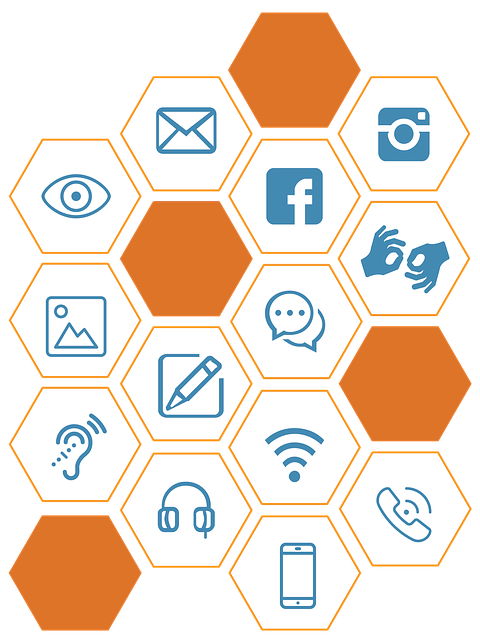
Idea Generation Accessibility Writing & Study Help Research Support
  • Brainstorm research questions
  • Narrow or expand a topic
  • Outline a paper or presentation
  • Text simplification
  • Text-to-speech
  • Translation
  • Alternate formats
  • Organize your thoughts
  • Improve clarity
  • Create study quizzes or flashcards
  • Explain concepts in different ways
  • Generate keywords
  • Summarize complex readings
  • Identify themes or arguments
    (Important: AI can’t replace scholarly research or access library databases — you must verify everything.)

What is AI?

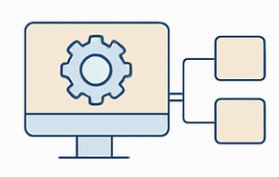
Artificial Intelligence refers to computer systems designed to perform tasks that normally require human intelligence. 

Creating text, images, or 

other media

Understanding languageRecognizing patternsMaking predictionsSolving problems
You don’t need a technical background to use or understand AI — but knowing its strengths and limits helps you use it well. You may hear terms like: 
  • Machine Learning (ML): Computers learn from data to make predictions or decisions.
  • Generative AI: Tools like ChatGPT, Copilot, Gemini, or Claude that create new text, images, code, or ideas based on input.

What AI CANNOT Do

AI is powerful, but also limited. Keep these points in mind:
  • AI often produces inaccurate or made‑up information.
  • AI cannot replace peer‑reviewed research or your critical thinking.
  • AI may generate false citations, statistics, or sources.
  • AI does not understand content — it predicts patterns in language.
    • AI may contain biases from the data it was trained on.

AI is a tool, not an authority.

How AI Fits Into Your Learning

Think of AI as a supporting resource, like brainstorming with a peer or using a study guide. It can help you:
  • Clarify ideas
  • Explore possibilities
  • Practice skills
  • Organize information
But your own judgment, analysis, and academic integrity always matter most

Need help?

The library is here to help you understand AI tools, use them ethically, and evaluate the information they create.
Reach out anytime for support with research, assignments, or questions about AI.

Using AI Ethically

Artificial Intelligence can be a powerful tool for learning, but it must be used responsibly. Ethical AI use means understanding your instructor’s expectations, protecting your own academic integrity, and thinking critically about how AI shapes information.

This page explains when AI is appropriate, when it’s not, and how to use it responsibly as a student.


Your Course & College Policies Come First

Always check:

  • Your syllabus
  • Assignment instructions
  • Course announcements
  • Academic integrity policies

When in doubt, ask your instructor before using AI for any graded work.

Appropriate Uses of AI

These uses support learning without replacing your own academic work.

AI can ethically help you:

  • Brainstorm topics or research questions
  • Generate keywords for database searching
  • Organize or outline ideas
  • Clarify confusing concepts
  • Summarize long texts to aid comprehension
  • Draft study questions, flashcards, or review guides
  • Rephrase text for accessibility
  • Translate or explain difficult vocabulary

Think of AI as a study partner, not a substitute for critical thinking.

When AI Use Is NOT Allowed

AI becomes unethical when it interferes with your ability to demonstrate your own learning.

AI should NOT be used for:

  • Writing an assignment for you
  • Generating a final essay, lab report, or project
  • Creating citations or quotations that do not exist
  • Fabricating evidence, quotes, statistics, or sources
  • Producing code or solutions when assignments require your original work
  • Submitting AI-generated text as your own writing

These actions can violate academic integrity and may result in disciplinary consequences.

AI Is Not Always Accurate

Even advanced tools can:

  • Provide incorrect or outdated information
  • Invent statistics or citations
  • Misrepresent research
  • Reflect bias in their training data

Always verify AI-generated content using library databases, textbooks, or credible sources.

How to Check AI Output for Accuracy

Try these strategies:

  • Cross-check facts in multiple trusted sources
  • Look up citations to ensure they actually exist
  • Compare key claims with peer-reviewed research
  • Run quotes through the library catalog or Google Scholar
  • Ask: "Does this sound too confident for something unverified?"
  • Check for bias or stereotypes, especially in summaries or descriptions
  • Verification is a core information‑literacy skill.

Disclosing AI Use

Some instructors require you to state how you used AI in your work.

A simple example statement:

I used an AI tool to brainstorm research questions and generate possible keywords. All research, analysis, and writing are my own.

Check your course’s preferred citation style for AI disclosure guidelines.

Privacy, Safety & Data Protection

AI tools often store your inputs. To protect your privacy:

  • Don’t enter confidential personal information
  • Don’t upload private documents unless you are sure they are safe
  • Be cautious with proprietary data (research, interviews, etc.)
  • Avoid sharing any information that could identify others

If in doubt, leave it out.

Bias and Fairness

AI systems can reproduce bias from the data they are trained on.

Be alert to:

  • Stereotypes in descriptions
  • Assumptions about people or groups
  • Cultural inaccuracies
  • Uneven representation in examples

Critical thinking is essential when using AI-generated content.

Using AI with Academic Integrity: Quick Guide

Use AI to:Don’t use AI to:
  • Brainstorm
  • Organize
  • Learn
  • Study
  • Rewrite for clarity
  • Translate
  • Simplify
  • Write assignments
  • Replace your research
  • Generate citations
  • Fabricate content
  • Complete tests or quizzes
  • Do the thinking for you


Need Help Using AI Ethically?

Librarians can help you:

  • Understand your assignment’s expectations
  • Evaluate and verify AI-generated information
  • Cite and document your use of AI
  • Use AI tools to support (not replace) your learning

You’re always welcome to reach out to the library for guidance.

Tip box:


Always disclose AI use if your professor requires it.
Keep a log of your prompts to show your work.

Realizing that there are ethical situations about how and when to use or not use AI, there might be some use of AI.

Your instructor will give you guidance as to whether or not they will accept the use of AI in a course.

Using AI thinking requires the giving of credit to that AI. This is a basic guide giving you a link to help on how to cite

MLA citation style

APA citation style